This entry is a translation into English, by Q76, of my text published in Spanish (Madrid, Isegoría, 2022, pp. 6-9) on the occasion of the exhibition Isabel Carnicer. Volver a fluir (Flowing again), held in Isegoría, Madrid, in 2022.
Isabel Carnicer’s Bildungskunst
Julio César Abad Vidal1
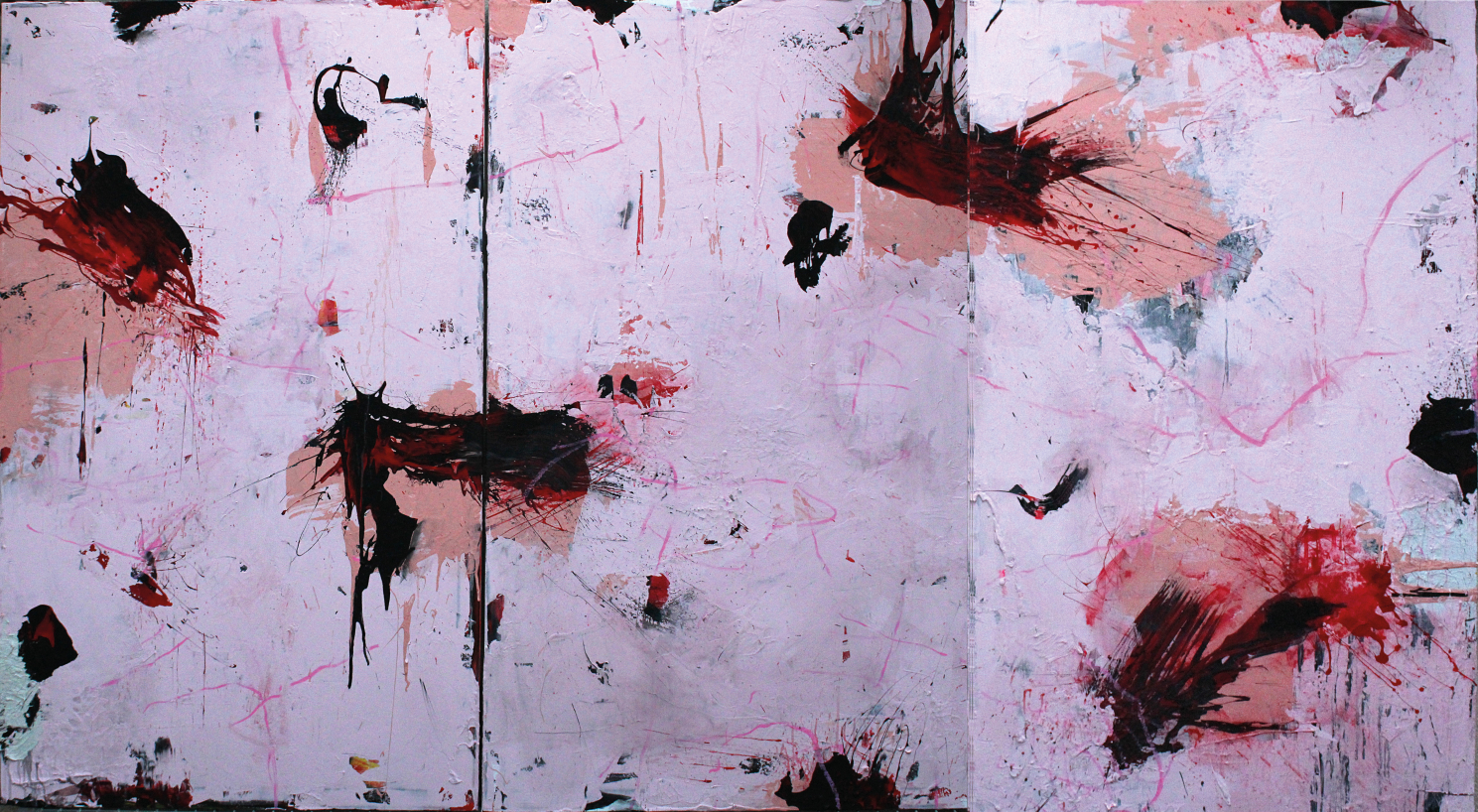
The images fashioned by Isabel Carnicer (Madrid, 1958) acquire a delicate and subtle beauty. Devoid of any truculence or drama, they convey – as if by magic– a serene joy. Relatively unknown yet, her career is built on patience and care. Her work thus stands as a soothing balm amidst the dominant framework of the hyper-spectacularized world of contemporary art, as tawdry as it is inane. Carnicer’s art caresses our so frequently wounded perception, and from its unpretentious formats and resources her work becomes eye-opening, arousing personal memory, chaos and order, mystery and beauty.

Carnicer is neat, methodical, and given to save different things, odds and ends. Her work weaves an unconventional autobiography, albeit cryptic for her viewer. Indeed, as defines the genre of the formative novel (Bildungsroman), Carnicer’s pieces would come to constitute –if we may– a «formative art» (Bildungskunst). Carefully stored, for years Carnicer has lived in her home side by side with what could be called “proof of life”, testimonies of her curiosity for art, encoded in pigments and materials – as is the case, for instance, with the airbrush-ink set she acquired three decades ago and a bottle of blue fountain pen ink, materials never-to-be-used until she recently resurrected them for the creations now exhibited. They all bear witness to her career in industrial and graphic design, undertaken in the mid-1980s, as evidenced –among others– from fragments of different vinyl samples.
Carnicer’s work thus displays nuanced layers of meaning, bringing her creations close to the palimpsest and its various written or graphic coatings, added –throughout time– on the same surface. An intimately baroque strategy, particularly favoured by artists who work on personal or collective memory, on various historical episodes, or on artistic language itself. One such example is a pictorial series in which Carnicer has first painted various acrylic works on paper, to subsequently tear them up into shreds, which she has then glued –without reconstructing their original appearance– on canvas or on a medium density fibreboard. In either case, an acrylic coating has been applied monochromatically – yet revealing depth– to all the fragments incorporated in each piece, thus enabling their harmonic coexistence by integrating the parts into a new whole unit. In tune with Carnicer’s methodology, the leftover strips are not disregarded, but, like so many other things, are stored for recovery, later along the road.
Obra Modular –a group of identical dimension modular structures (24 x 16 cm each) created in 2009 in acrylic on paper, torn by hand and pasted on canvas– is another of these series which, in addition, introduces a participatory component for its viewer. The observer can engage in a playful exercise, consisting in the manipulation of the chromatically highly contrasting set of images, so as to arrange them in a variety of diagonal compositions, forming geometric motifs such as rhombuses, arrowheads or zigzagging arrangements…

Sometimes the ripped materials come from photographs, for –together with her pictorial and graphic work– Carnicer curates a remarkable photographic production. She nurtures the exercise of a delicate urban photography, capturing chances and coincidences that establish visual games, as well as other images where she identifies echoes of her own artistic compositions. This is the case –for example– of the Retiro tree-trunk images, where Carnicer has discovered wounds duplicating the construction of some of her either pictorial or graphic personal series, and therefore uses to cut out branch textures for her pieces.
One of these works, Estratos (2006-2008)2 presents an unequivocal reference to anatomy –specifically of the author– through photographs transferred to paper, later torn and treated with acrylic. Thus, composed from an image the artist transferred to paper and subsequently tore by hand into fragments to be later glued onto canvas without reconstructing the original image, the Desnudo triptych (2008; 150 x 155 cm) portrays a nude of the author herself. Some of these same fragments have been relocated in a contemporary work, though of considerably smaller dimensions, Estratos y cuerpos (2008; 40 x 40 cm). In both cases, however, the original motif remains unrecognizable.

Carnicer cultivates collage with intoxicating effects. A good example of this technique is her magnificent Collages series –created in 2018– consisting of a total of twenty pieces on pages torn from a notebook and framed homogeneously (33.5 x 25 cm)3. In step with Carnicer’s particular taste for strata, some of these works present two layers, the upper one displaying geometric cut-outs framed as windows, through which a blank piece of paper is shown.
Another of these series displays what seems to be splits in the manner of the cuts inflicted on the canvas by Lucio Fontana, though they are not so in reality. On the contrary, while gluing the materials, Carnicer has devised a continued caesura, which she has named «wound». By means of this element she seeks to illustrate the random, ominous, and uncontrolled element in our seemingly ordered existence. Moreover, through these scars, Carnicer refers back –rather graphically– to the popular expression she used to hear from her grandmother explaining things happen because “it was God’s will”.
In the 2018 Collages series, set in a homogeneous format of 21 x 12 cm each, Carnicer rearranges fragments from the same image. Starting from mixed media originals, the pieces sometimes offer configurations reminiscent of, for example, a totem pole, or a surreal landscape. More often than not, however, Carnicer experiments with a geometric layout that gives a new unity to the split fragments.
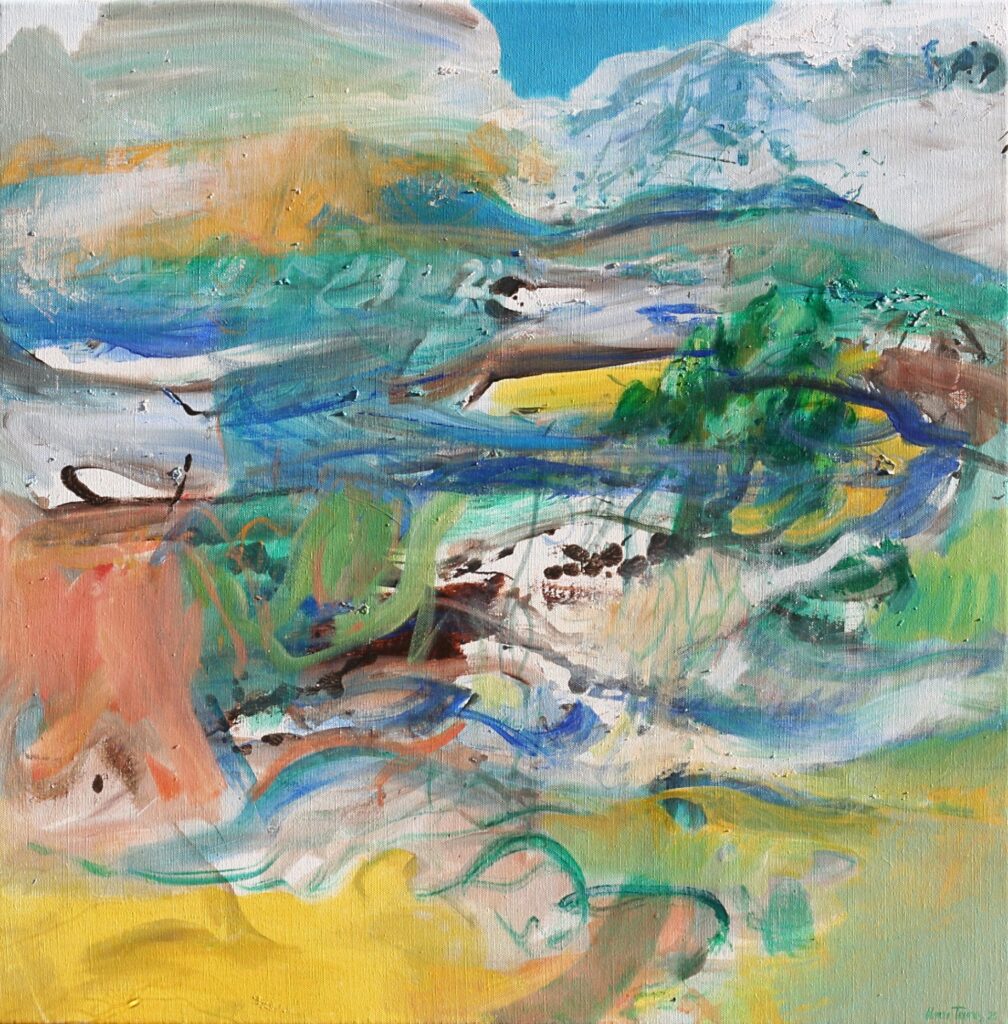
Likewise, the pieces of her hypnotic series Cartografía de un paisaje (Cartography of a Landscape), made on paper in 2022 –and widely represented in this exhibition– offer a panorama of a large part of the compositional strategies and techniques previously mentioned, such as the use of collage and found materials (zealously preserved). Nevertheless, this collection boasts a greater chromatic profusion than most of her other series, to the point that therein Carnicer has developed a Daedalic sense of space that, on occasions, seems to refer to mysterious planes and fantastic maps.

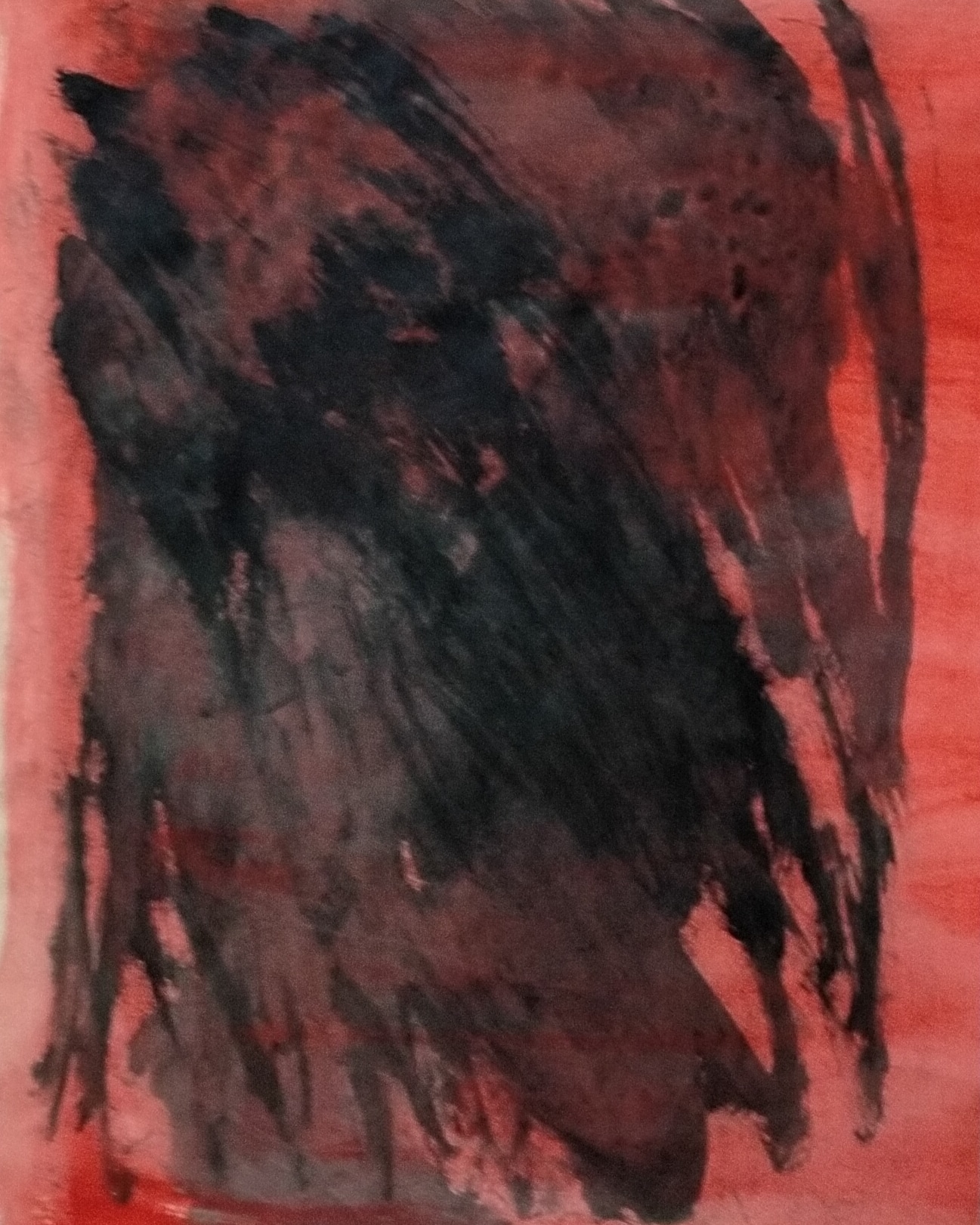
To conclude, Carnicer’s work brings together chaos and order, particularly by means of her patient, mediated and delayed procedure, based on the confluence of a sought-after accidental component, followed by its ulterior organised recreation. This is particularly evident in the Tinta azul (Blue Ink) series, made in 2022 with fountain ink and graphite on canson paper, as well as with some collage contributions. Though having different dimensions, the fabulous series is shaped in small format pieces whose key element is the mental reconceptualization they have undergone. On this occasion, instead of proceeding to a new construction from fragments, Isabel Carnicer randomly arranges on paper some first manifestations, and then she gives the structures a finish of serene beauty, a delicate mystery. So much can be achieved, indeed, with so little. Cultivating the gifts received without fuss is also art.

[1] Julio César Abad Vidal has an Extraordinary Doctorate Award in Philosophy and Letters from the Autonomous University of Madrid. He is a Doctor of Philosophy –Area of Aesthetics and Theory of the Arts–, Bachelor of Art History and Bachelor of East Asian Studies, also from the UAM.
[2] The series was exhibited in May 2008, together with the sculpture series Pétalos by Mireille Fombrum, at the Alexandra Irigoyen gallery in Madrid.
[3] Carnicer presented her Collage series at La Pared Roja in La Fábrica, Madrid, between September 13th and November 28th, 2018.